


ASWB BSW LCSW MSW | Exam Prep
4.718.00 Reviews
App Specs
- Version
- 2.1.020
- Updated On
- License
- Free
- Downloads
- 10,000+
- Developer
- Prepia Inc
- Categories
- Education
- Platform
- Android
Screenshots
 Analysis by AppCompare
Preparing for a social work licensing exam can feel strangely difficult at the beginning. You may know the material from school or practice, yet still struggle with the wording, pace, and judgment calls that appear in exam-style questions. ASWB BSW LCSW MSW | Exam Prep is an education app from Prepia Inc that focuses on preparation for BSW, LCSW, and MSW-related tests. I found its main value in turning a broad study goal into short, repeatable practice sessions rather than asking me to organize everything from a textbook alone.
The app is free to install and is suitable for Everyone, although some of its study content is available through in-app purchases ranging from $5.99 to $64.99 per item. That combination makes it easy to try before deciding whether it deserves a place in a serious study routine. It is currently at version 2.1.020 and works on Android 7.0 or later, so compatibility should not be a major obstacle for people using an older Android phone.
My overall impression is positive, but with an important qualification: this is best treated as a focused practice companion, not as a complete replacement for official exam guidance, supervised review, or a well-organized study plan. If you want quick access to questions and a way to check how you think under exam pressure, it is worth exploring. If you need long-form lessons, extensive explanations, or a full reference library in one place, you may need to combine it with other resources.
What to expect when you open the app
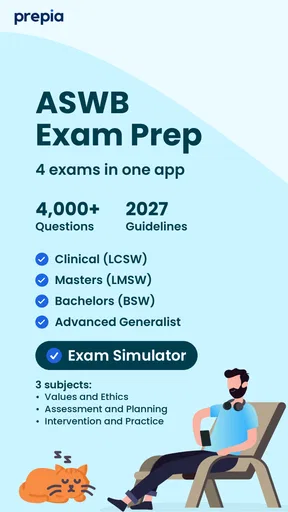
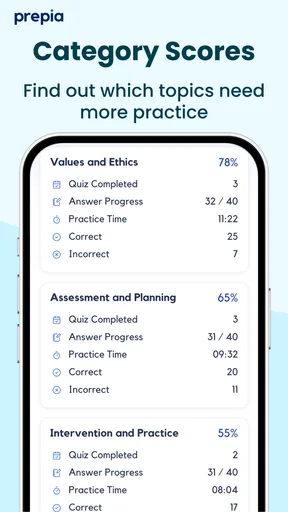
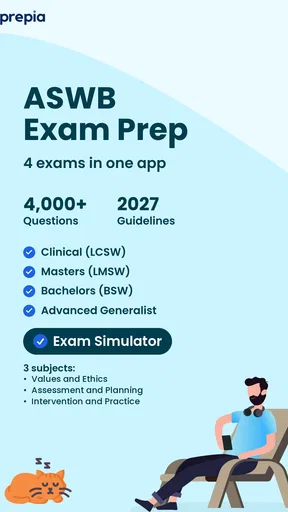
The first thing to understand is the app’s intended role. Its store summary points toward BSW, LCSW, MSW, and advanced generalist tests, with an emphasis on the 2026 exam cycle. That makes it more specific than a general flashcard app and more practical than simply searching the web for scattered social work questions. I approached it as a question-practice tool: open it when I have a defined amount of time, work through material, and use the result to decide what deserves more attention.
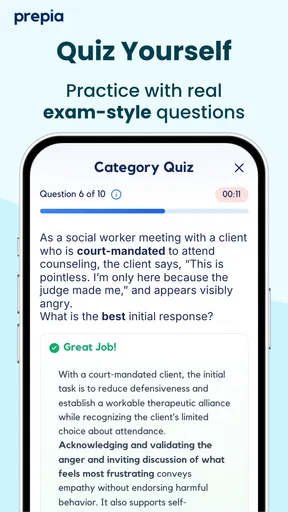
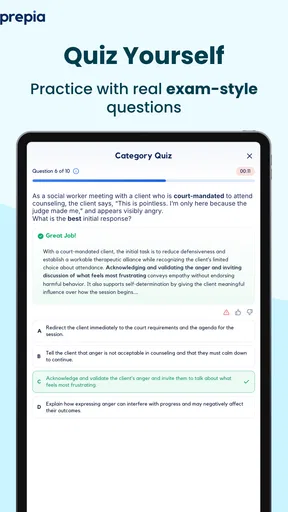
That approach matters because licensing preparation is not only about remembering terms. Many questions require choosing the best first response, identifying the most appropriate professional action, or separating a plausible answer from the strongest one. A practice app can help with that decision-making rhythm, especially when I use each question as a prompt to explain why one answer is better than the others.
The app has attracted a 4.7 average from around 275 ratings, with roughly 10K+ installs. Those figures suggest that it has found a clear audience among people preparing for social work exams, while also reminding me that it is a relatively focused tool rather than a universally known study platform. I would not choose it because of the rating alone. I would choose it because the exam-specific focus is more relevant to a social work candidate than a generic education app.
Before beginning, I would keep the official exam outline and your own course notes nearby. The app can help you practice, but your preparation should still be anchored to the exam you are actually taking. BSW, MSW, LCSW, and advanced generalist candidates do not necessarily have identical needs, and a question that feels useful for one path may be less relevant to another. The most effective use is targeted practice, not passive scrolling.
Worth Reading Before You Choose

Flipboard Shows What News Apps Must Do Beyond the Feed

Switching to Android Auto Means Rethinking Your Driving Routine

Google Calendar Makes a Crowded Week Easier to Manage

Ludo King Makes the Most of the Minutes Between Plans

Baby Panda World Brings Quick Play to Modern Phones, but Its Game Library Feels Busy

ESPN’s Live Game View Makes Following Close Games Easier
Who will benefit most
I think the strongest audience is a first-time candidate who feels overwhelmed by the amount of material and needs a simple way to start. It is also useful for someone returning to study after work, family responsibilities, or a long break from school. A phone-based format lowers the effort required to begin: you do not need to clear a desk, open several documents, or decide which chapter to read first.
It can also suit a candidate who already owns a larger review course but wants extra question practice during small gaps in the day. A ten-minute session on a commute break or before an appointment can be more realistic than promising yourself a full evening of studying and then postponing it.
I would be more cautious if you learn best through detailed lectures or need a tutor to unpack every incorrect answer. The app’s value depends on how much thinking you bring to the questions. If you simply tap an answer, glance at the result, and move on, the practice may feel productive without actually improving your reasoning. People who need extensive accessibility controls, printed materials, or a structured instructor-led schedule may prefer a different primary resource.
Setting up a useful first study session
Getting started is straightforward in principle: install the free app, open it, and identify the exam direction that matches your goal. I would not rush past that choice. A common mistake is treating every social work exam label as interchangeable. Take a moment to decide whether you are preparing for the BSW, MSW, LCSW, or advanced generalist route, then keep that target visible in your notes so later sessions remain focused.
The free entry point is helpful because you can judge the feel of the material before spending money. I recommend using the initial access to answer enough questions to assess three things: whether the wording resembles the level of reasoning you need, whether the explanations help you understand mistakes, and whether the available material fits your exam path. If the practice feels too broad or too shallow for your needs, discovering that early is better than buying content first.
Because individual purchases are available, I would treat payment as a study decision rather than an automatic upgrade. The listed range extends from $5.99 to $64.99 per item, so the cost can be meaningful depending on what you choose. Before purchasing, I would write down the exact gap I am trying to solve. For example, I might need more practice with professional judgment questions, a larger question pool, or preparation aligned with a particular exam level. Paying for content without that goal can create the illusion of progress while leaving the real weakness untouched.
My preferred setup is simple. I keep a separate note divided into three sections: questions I missed because I lacked knowledge, questions I missed because I misread the situation, and questions where two answers seemed equally reasonable. This distinction is more useful than a single percentage because each type of mistake needs a different response. Knowledge gaps call for review; reading mistakes call for slower analysis; close choices call for comparing professional priorities and sequencing.
Another practical step is to decide when the app will be used. I would choose one short daily window and one longer weekly session. The short session keeps the material familiar, while the longer session gives me time to revisit mistakes instead of only collecting new questions. This workflow is especially helpful for working candidates because it separates maintenance from deeper review.
Your first meaningful success
The first useful milestone is not finishing a large set of questions. It is completing a small practice session and being able to explain your reasoning afterward. I would begin without looking at notes, answer carefully, and mark every uncertain response even if it turns out to be correct. A lucky answer is not the same as a reliable skill.
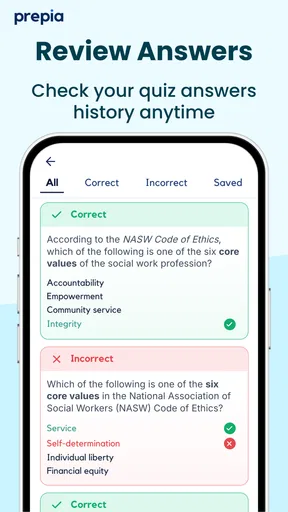
After checking the results, I would choose just one missed or uncertain question and write a short explanation in my own words. I would include what the question was testing, why my first choice was tempting, and what made the stronger answer preferable. This turns the app from a quiz into a feedback loop. It also creates a personal review record that is easier to revisit than a long list of wrong answers.
A realistic example would be a social work professional studying after a shift. She opens the app during a quiet break, completes a short group of questions, and notices that she repeatedly chooses an action that seems helpful but is not the best initial step. Instead of immediately starting another set, she records the pattern and checks her course material for the principle behind it. The next day, she returns to the app specifically looking for that kind of sequencing problem. That is a meaningful success because the session changes what she does next.
I also recommend reading every option, including the ones you reject. Exam questions often include answers that are ethically reasonable but poorly timed, too broad, or less appropriate than another response. The app is most valuable when you practice distinguishing those shades of meaning. A fast correct-answer habit may feel efficient, but deliberate comparison is closer to the real mental work these exams demand.
One non-obvious advantage of a mobile tool is that it can expose when your confidence is inconsistent. I may answer correctly but feel unsure, or answer incorrectly while feeling certain. Tracking both outcomes helps identify overconfidence, which is often more dangerous than simply lacking information. I would use a simple mark beside each question—confident, uncertain, or guessed—and review the confident mistakes first.
Confusion that can slow new users down
The biggest source of confusion is the difference between exam preparation and general social work learning. This app is not something I would open casually to learn the profession from the beginning. A new student may recognize terminology but still lack the clinical, ethical, or practice context needed to judge nuanced answers. In that situation, the app works better after foundational study, not before it.
Another point of friction is assuming that a correct answer proves complete understanding. Practice questions are snapshots. They can reveal a weak area, but they do not automatically teach every related concept. When I miss a question, I try to identify the underlying topic rather than memorizing the wording. Otherwise, I may perform well on a familiar question and still struggle when the same principle appears in a different scenario.
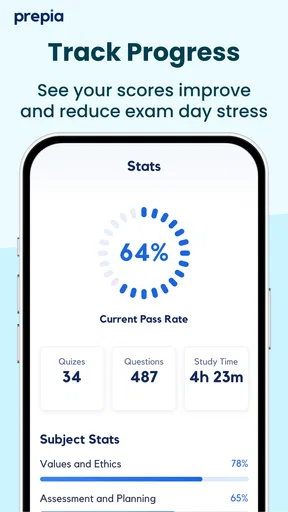
I would also avoid comparing progress directly with another person. Candidates bring different academic backgrounds, work experience, and familiarity with test language. A lower result in an early session is not necessarily a warning sign, while a high result based on guessing is not necessarily readiness. The useful comparison is between your own explanations over time: are they becoming more precise, and are you making fewer avoidable reading errors?
There is also a practical distinction between the free installation and the optional paid content. Installing the app does not mean every preparation resource is automatically available without charge. Since purchases are offered individually, I would inspect what a purchase is intended to add and decide whether it matches my plan. This is particularly important for students managing a limited budget. A free starting point is welcome, but it should not be mistaken for a promise that the entire preparation journey will remain free.
Finally, the app should not be used as a substitute for checking current official requirements. Exam pathways can involve details beyond question practice, and candidates should confirm registration, eligibility, scheduling, and other administrative matters through the appropriate official channels. I see the app as a study surface, not an authority for every part of the licensing process.
Building a stronger routine after the first session
Once the first session is complete, I would organize the next step around patterns rather than volume. If most mistakes come from unfamiliar concepts, pair the app with a textbook or class notes. If the concepts are familiar but the answers are too slow, use timed practice carefully. If the problem is choosing between two plausible options, write out the priority that separates them. This makes each session answer a specific question about your readiness.
A useful workflow is to alternate between broad and narrow practice. On one day, work through mixed material so you cannot predict the topic. On another, focus on the single area that produced the most uncertainty. Mixed practice tests retrieval and flexibility; focused practice repairs a weakness. Using only one style can give a misleading picture of progress.
I would also schedule review days with no new questions. Revisit your notes, explain difficult items aloud, and return to earlier mistakes without immediately checking the answer. This is where the app’s short-session format becomes useful: it gives you a compact source of prompts, while your notes preserve the reasoning that made each item valuable. Reviewing mistakes is usually more important than collecting more questions.
For a first-time user, the path can therefore be reassuringly simple: start with the free access, identify the correct exam direction, complete a small set without outside help, record uncertainty as well as errors, and use the results to choose one study topic. Only after that should you consider paid material. This sequence prevents the common mistake of buying a larger resource before knowing how you actually study.
Compared with ordinary web searches, the app offers a more concentrated experience. Search results can provide explanations and articles, but they also create distractions and make it difficult to track a consistent practice habit. Compared with a full review book, the app is more convenient and easier to use in short bursts, while a book is generally better for sustained reading, annotation, and broad conceptual coverage. Compared with a tutor or course, it is more flexible and less personal, but it cannot respond to a misunderstanding in the way an instructor can.
That trade-off defines my recommendation. I would use ASWB BSW LCSW MSW | Exam Prep as the question-practice layer in a wider plan, especially when time is fragmented. I would not rely on it alone if I were starting with weak fundamentals, needed detailed teaching, or wanted a guaranteed schedule imposed by someone else. The app is strongest when I already have study material and need a convenient way to test decisions repeatedly.
My final view for a first-time candidate
After using it as a focused preparation aid, I see a clear reason to recommend it to the right person. It is free to begin, aimed specifically at social work licensing preparation, and available from Prepia Inc for Android users on version 7.0 or later. Its 4.7 average and more than ten thousand installs show that other learners are using it, but the more important question is whether its practice style matches your needs.
I would tell a friend to install it if they are preparing for a BSW, MSW, LCSW, or advanced generalist exam and want a low-friction way to practice during ordinary parts of the day. I would suggest starting slowly, studying the reasoning behind each answer, and delaying any purchase until the free experience reveals a specific need. That approach makes the app useful even before spending money.
I would steer someone toward a book, course, tutor, or official preparation material first if they need foundational instruction, extensive explanations, or guidance through the complete licensing process. The app cannot replace those forms of support. It can, however, make practice more regular and help reveal the difference between knowing a concept and applying it under pressure.
My recommendation is therefore favorable but deliberate: use this app to create a dependable question-and-review habit, not as a shortcut around serious preparation. When paired with official information, solid study material, and honest review of mistakes, it can become a practical companion for the long stretch between deciding to take the exam and feeling ready to face it.
Pros
- Covers BSW
- MSW
- LCSW
- and ASWB exam preparation needs.
- Practice questions help identify weak areas before test day.
- Useful study material for reviewing core social work concepts.
- Can support flexible study sessions during commutes or breaks.
- Focused format may reduce the need for scattered study resources.
Cons
- Some content may not fully match your state’s licensing requirements.
- Question difficulty may differ from the official ASWB exam.
- Advanced features or complete materials may require payment.
- Explanations may not cover every topic in enough depth.
- Regular updates are important as exam policies and content change.
FAQs for ASWB BSW LCSW MSW | Exam Prep
What is ASWB BSW LCSW MSW | Exam Prep?
ASWB BSW LCSW MSW | Exam Prep is a study app designed for social work students and professionals preparing for Association of Social Work Boards examinations. It generally focuses on practice questions, review topics, quizzes, and exam-style preparation for levels such as Bachelor’s, Master’s, and Clinical. It should be used as a study aid rather than as an official ASWB examination or a replacement for approved preparation materials.
Which ASWB exam levels does the app support?
The app is intended to help users preparing for several ASWB examination categories, including the BSW, MSW, and LCSW levels. Available subjects and question sets may differ depending on the selected exam mode, subscription, or app version. Before downloading or purchasing anything, check the current in-app descriptions carefully to confirm that your specific examination level, jurisdiction, and preparation needs are covered.
Does the app contain real ASWB exam questions?
Users should not assume that the application provides authentic or previously used ASWB examination questions. Most preparation apps create original practice questions that imitate the wording, concepts, and decision-making style commonly associated with social work licensing exams. The app can help you identify weak areas and practice pacing, but official ASWB materials and your licensing board remain the most reliable sources for current exam rules and content.
Can I use ASWB BSW LCSW MSW | Exam Prep without an internet connection?
Offline availability depends on how the app stores its questions, explanations, progress data, and premium content. Some features may work after content has been loaded, while updates, account synchronization, advertisements, or subscription verification may require an internet connection. If offline studying is important to you, test the app in airplane mode after installation and review its permissions and download settings before relying on it during travel.
Is ASWB BSW LCSW MSW | Exam Prep enough to pass the licensing exam?
The app may be useful for repeated practice, reviewing social work concepts, and becoming familiar with exam-style reasoning, but no study application can guarantee a passing result. Your preparation should also include the official ASWB examination guide, current jurisdiction requirements, ethics and practice standards, and a structured study schedule. Consider the app one part of a broader plan, especially if you need detailed explanations or professional instruction.


